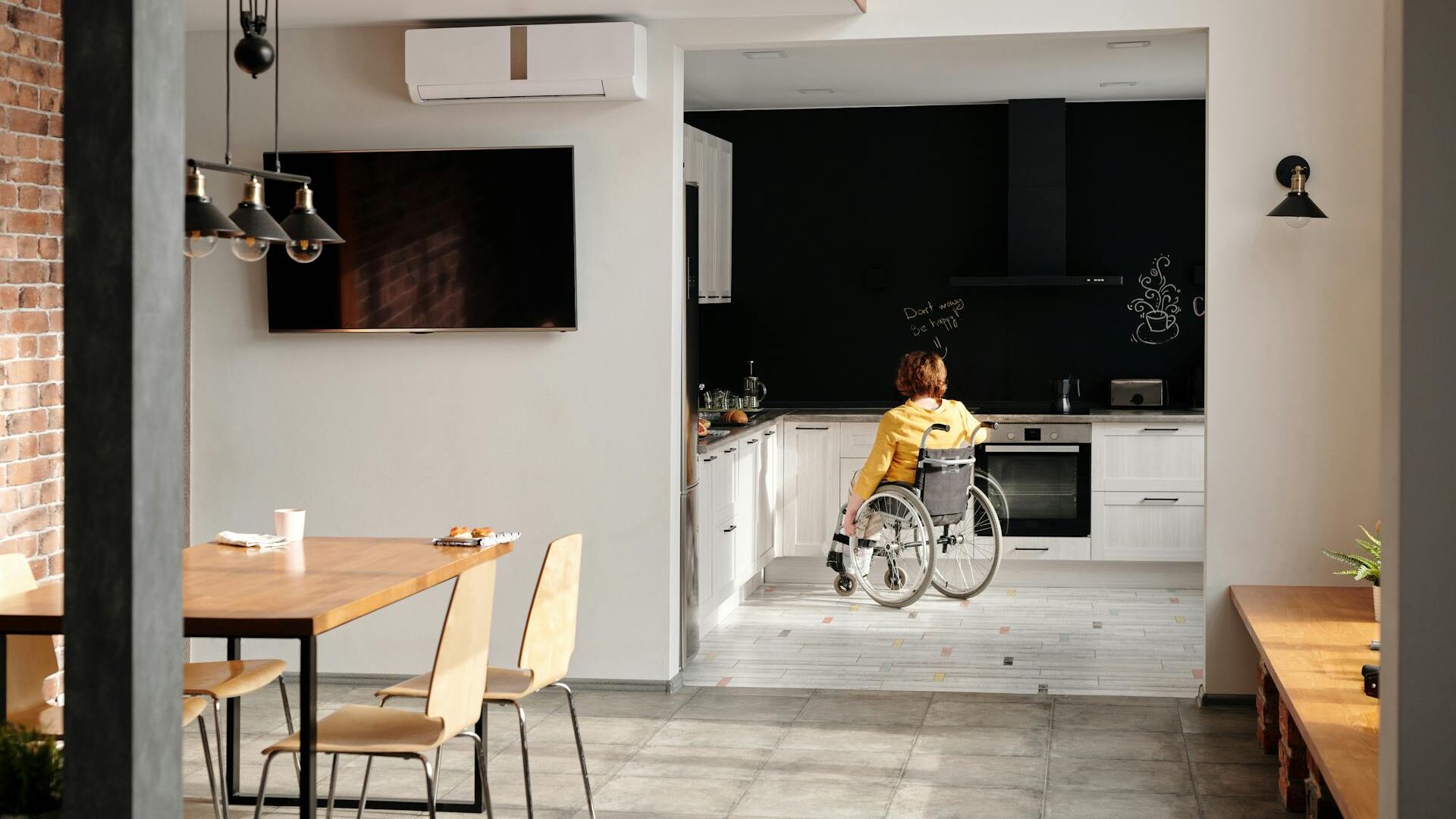
Accessible housing: how our world becomes better for everyone.
Accessible housing goes far beyond the needs of people with limited mobility. It is a housing concept that creates more comfort, safety and independence for people of all ages and in many different life situations.
As society continues to age and the focus on inclusion grows, accessible building and renovation are becoming increasingly important. That is why it is worth taking a closer look at the many benefits and design options of an accessible home.
LIVING WITHOUT BARRIERS
What does accessible housing mean?
Accessible housing refers to the design of living spaces that are conceived in such a way that they are equally accessible and usable for people with and without disabilities, for young and old. The key features include:
Step-free access: No steps or edges that represent an obstacle.
Freedom of movement: Sufficient space for wheelchairs or walking aids, often a movement area of at least 150 cm × 150 cm in important areas.
Accessible wet rooms: Level-access showers, wheelchair-accessible washbasins and grab rails.
Reachability: Light switches, sockets and window handles at an easily reachable height.
Important: The implementation of these standards not only increases the quality of life for people with mobility limitations, but also offers comfort and safety for all residents – for example, for parents with strollers or older people who want to live accessibly.
FAQ: The most searched questions about accessible housing
1. What is the difference between accessible and wheelchair-friendly?
Although both terms are often used synonymously, there is an important difference:
- Accessible: describes an environment that is accessible to all people without particular difficulty, such as a threshold-free entrance or easy-to-use fittings.
- Wheelchair-friendly: goes beyond accessibility and meets specific requirements for wheelchair users. These include, for example, larger movement areas of at least 150 cm × 150 cm, wheelchair-accessible worktops or a specific height for operating elements.
2. How high are the costs for an accessible renovation?
The costs vary greatly depending on the scope of the renovation. Smaller adaptations, such as removing thresholds, are often cost-effective. A complete bathroom renovation, however, can quickly reach higher amounts. It is advisable to obtain a cost estimate from a specialist planner if you want to make your home accessible.
3. Is there financial support for accessible renovation?
Yes, in many countries and regions there are various funding options. These include:
Grants from long-term care insurance funds, for measures to improve the individual living environment.
Loans or grants from state development banks, for example for age-appropriate renovation.
Regional funding programs.
Find out about the specific programs from your local building authority or your health insurance provider. A good contact can also be a homeowners’ association or the advisory office of your city.
4. Do I need to obtain a permit for the renovation?
For larger structural changes, such as adding an elevator or widening door frames, a building permit is generally required. Smaller, non-load-bearing renovations, for example a level-access shower, often do not require a permit, but should always be discussed with a specialist.
5. Which DIN standards regulate accessibility in Germany?
The most important standards are:
DIN 18040-1: Accessible building – planning principles – Part 1: Publicly accessible buildings.
DIN 18040-2: Accessible building – planning principles – Part 2: Apartments.
6. Where can I find experts for accessible building?
Look for specialized architects or civil engineers with additional training as an “expert for accessible building”. Many chambers of crafts and professional associations keep lists of qualified companies.
ACCESSIBLE ENVIRONMENT
The benefits of accessibility.
An accessible environment creates inclusion and offers numerous benefits that secure accessible housing:
Independence: People with limitations can shape their everyday lives in a self-determined way.
Flexibility: The home is prepared for all phases of life, for example after an accident or in old age.
Increase in value: Accessible properties are future-proof and in high demand on the market.
Comfort: Wider doors and a well-thought-out room layout make moving around and furnishing easier.
NEW WAYS OF MOBILITY
How Scewo BRO overcomes barriers.
Accessible living means more than just adaptation – it is about real independence and the freedom to shape everyday life without limitations. Modern technologies show today that even supposed obstacles such as stairs or difficult terrain no longer have to be insurmountable barriers.
This is exactly where innovative solutions come in: they combine well-thought-out design with smart technology and open up new possibilities to move safely and independently – both within your own four walls and on the go.
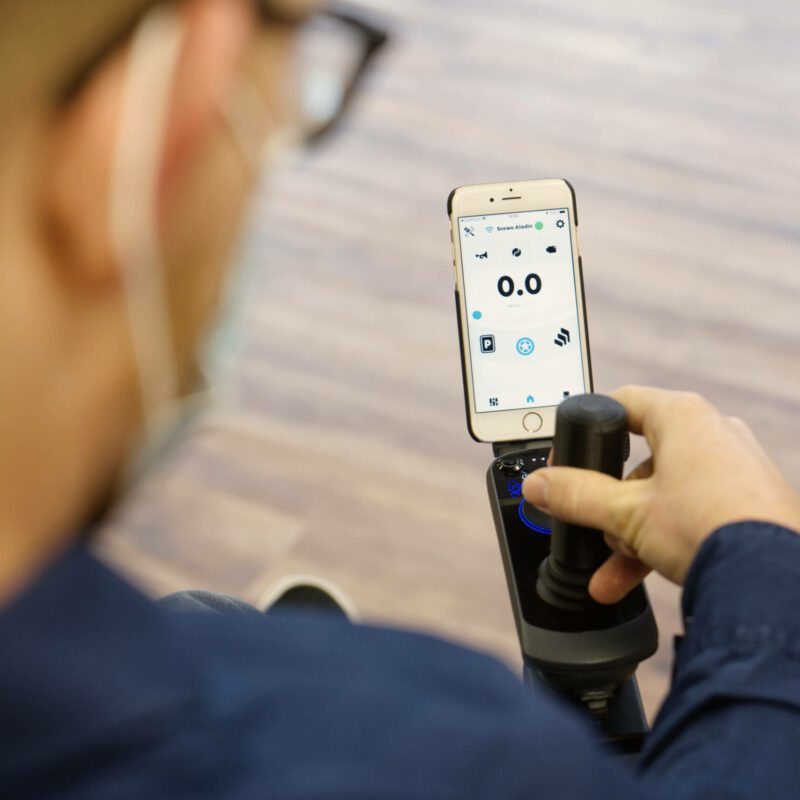
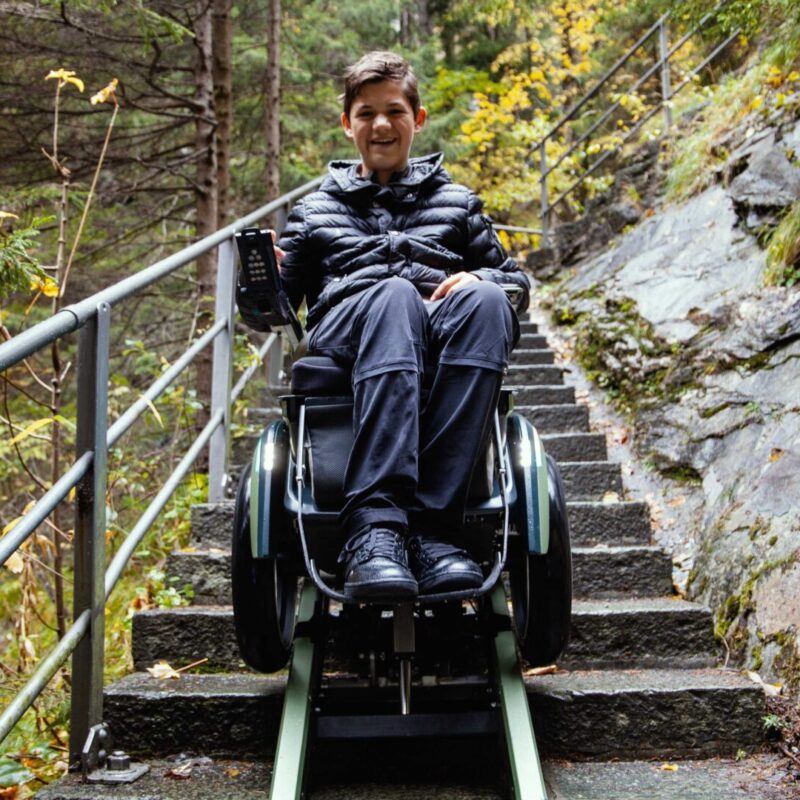
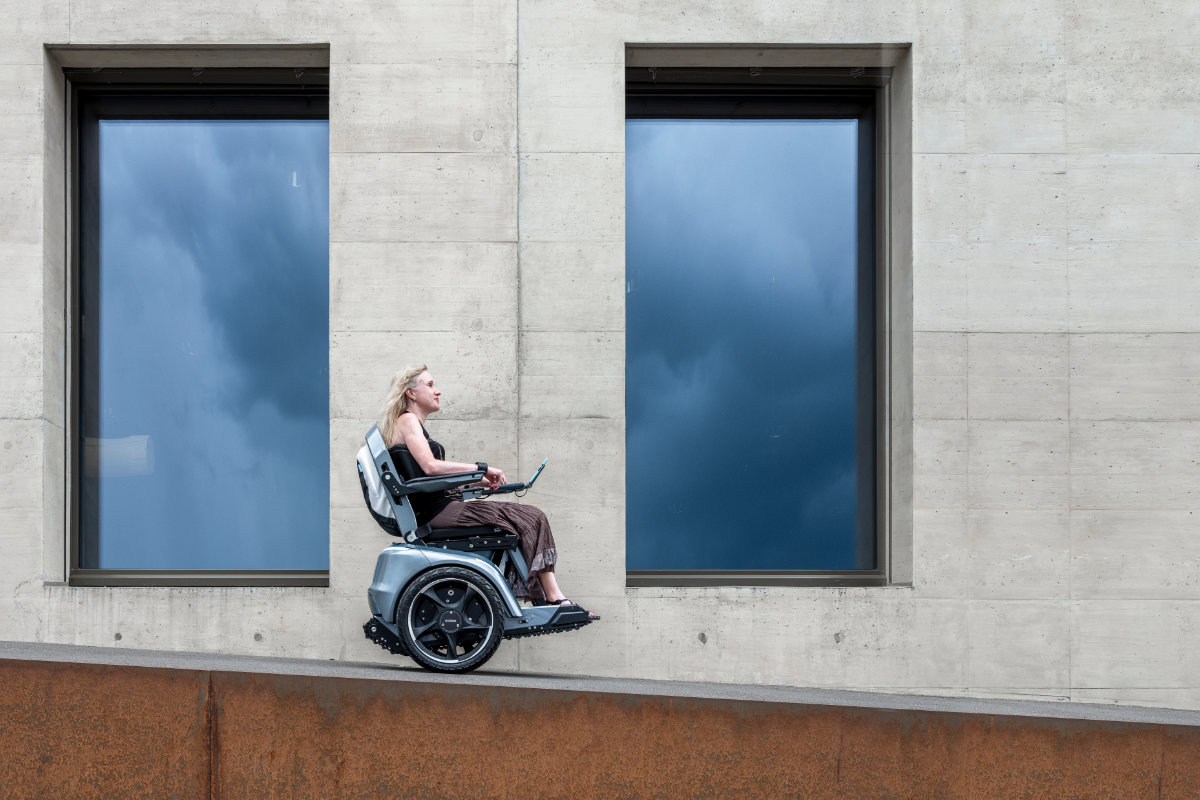
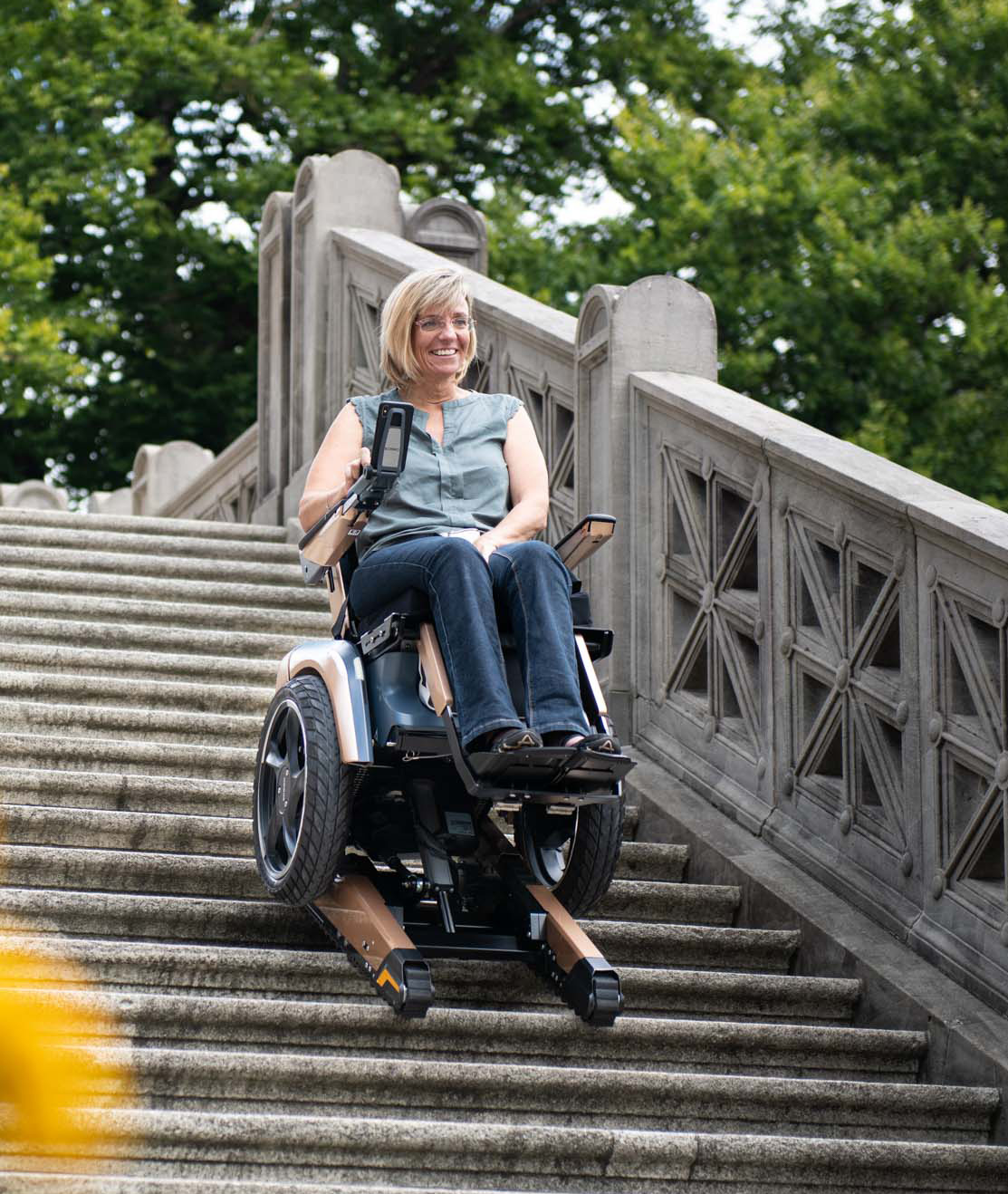
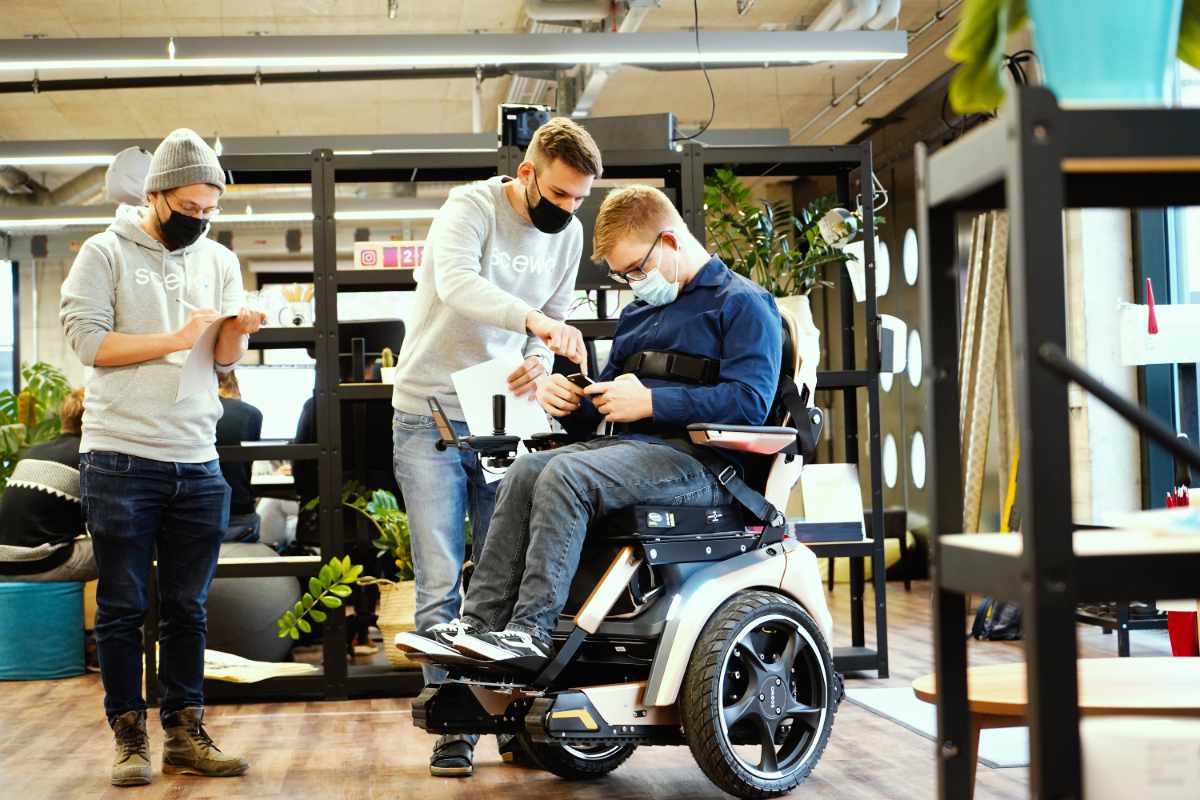
One example of this is the stair-climbing power wheelchair Scewo BRO. It was specially developed to actively overcome barriers such as stairs, single steps or kerbs and to enable users to experience a new level of mobility.
Free testdrive