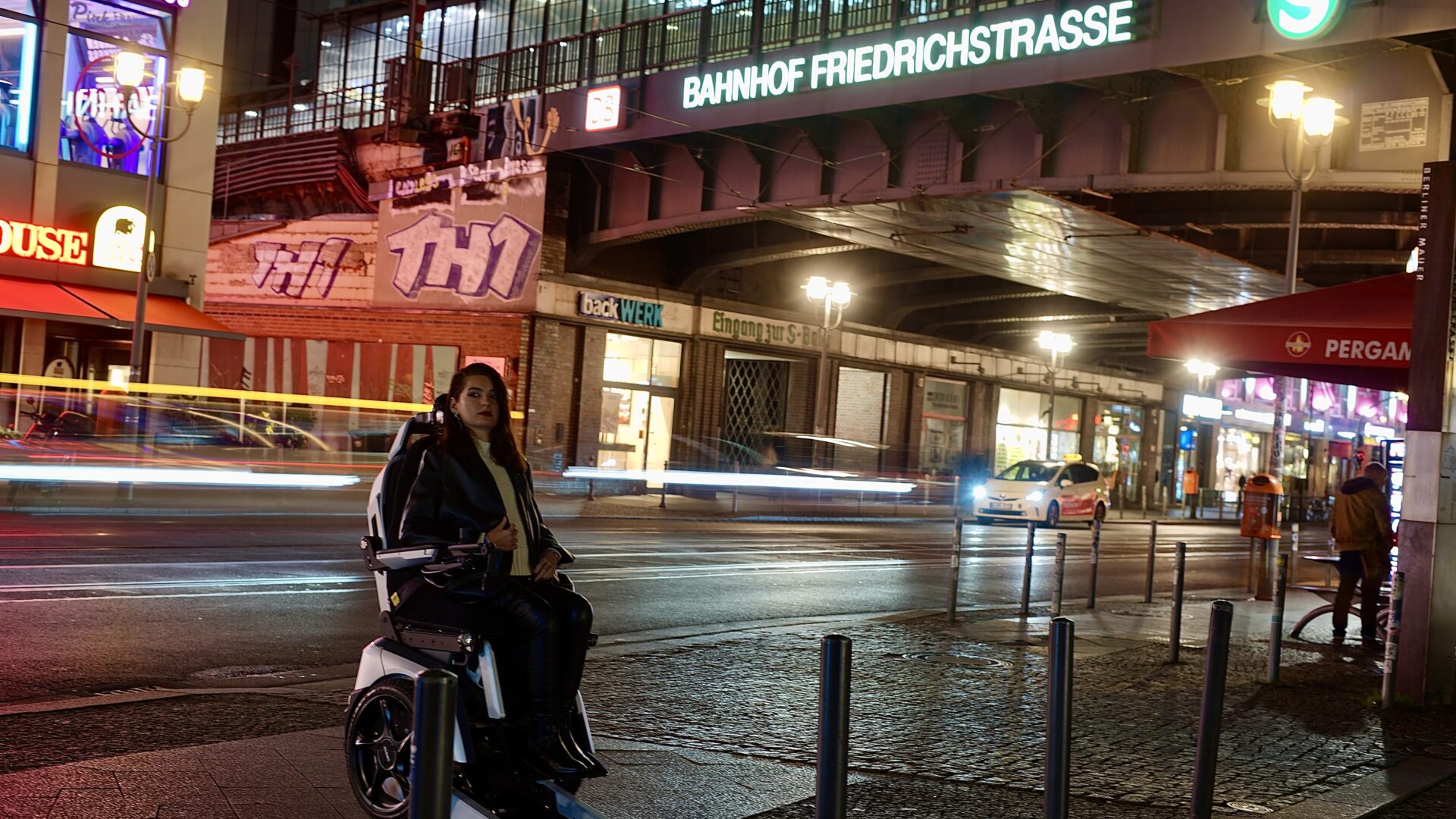
Photos in the article: Anika Danielle Wagner
Going out in a wheelchair: Felize’s experiences
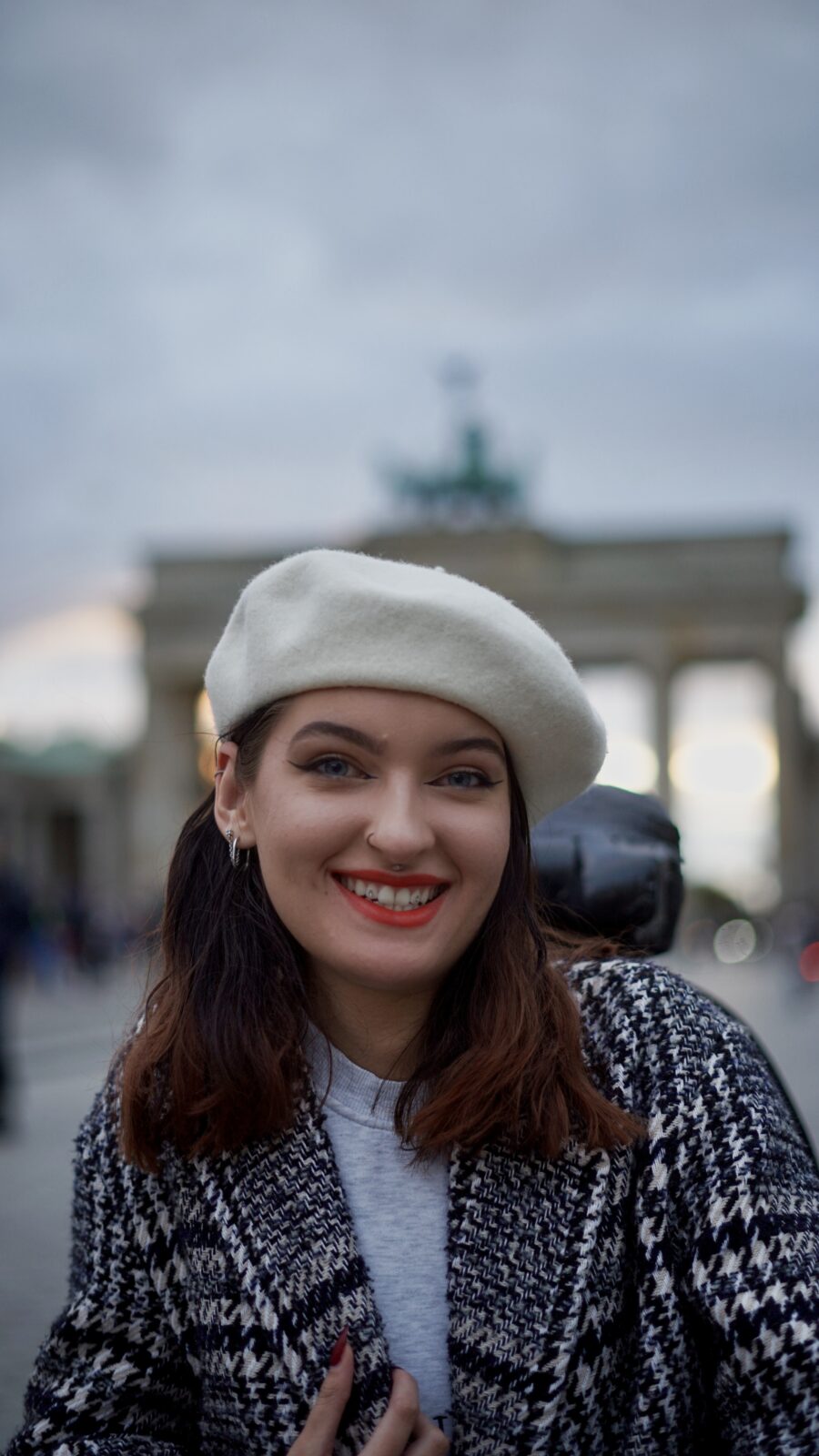
Berlin’s Berghain is considered a legendary myth by many — famous for its strict door policy and the countless stories surrounding the club. As exclusive as it is for most people, for Felize Fiedler, who uses a wheelchair, it represents a space where inclusion is truly lived. In this article, we take a look at her personal experiences at club nights, festivals, and concerts. She talks about the barriers she still encounters, the moments when inclusive concepts actually work, and the role of modern technologies like the Scewo BRO, which give her independence and freedom when going out.
Barriers to partying
When obstacles dampen the experience.
For wheelchair users like Felize, going out usually requires careful planning. At festivals and concerts, physical and organizational barriers often shape the entire experience. The journey itself can already be challenging — for example, when shuttle services are not wheelchair-accessible. On-site, uneven ground, steps, or far-away accessible toilets make it harder to move around and fully take part in the event. These are issues that could easily be avoided with thoughtful, inclusive planning.
“A successful event, for me, means having fun and feeling like part of the crowd,” Felize explains. Yet even measures intended to support inclusion can sometimes have the opposite effect. Wheelchair platforms, for instance, offer a good view of the stage but remove wheelchair users from the action — making them feel, as Felize puts it, like they’re being “placed aside” rather than included.
Moments like bottles being carelessly put under her wheelchair or people asking if they can place their jacket on her chair show that awareness still has room to grow. At the same time, Felize meets these situations with humor, responding with a wink: “An integrated coat hook — now that’s a design idea Scewo could pass on to the development team.”
When inclusion concepts truly work
What Berghain gets right.
“Inclusion and diversity, for me, mean giving everyone the best possible conditions to participate in events,” Felize explains. True inclusion can only succeed when people with specific needs are actively involved in the planning process and organizers are open and willing to engage with new accessibility concepts.
For Felize, Berghain is an example of how inclusion can work when it’s taken seriously. Accessible restrooms, elevators connecting the different floors, and barrier-free dance areas enable real participation. Even more important to her, however, is the attitude of the people inside: “Maybe it’s the strict door policy and the no-phone rule, but I feel like everyone there can be who they are — or even slip into a different role for a night,” she says. At Berghain, it’s all about what connects people: the music, the dancing, the shared experience. And with a grin she adds, “What happens in Berghain stays in Berghain.”
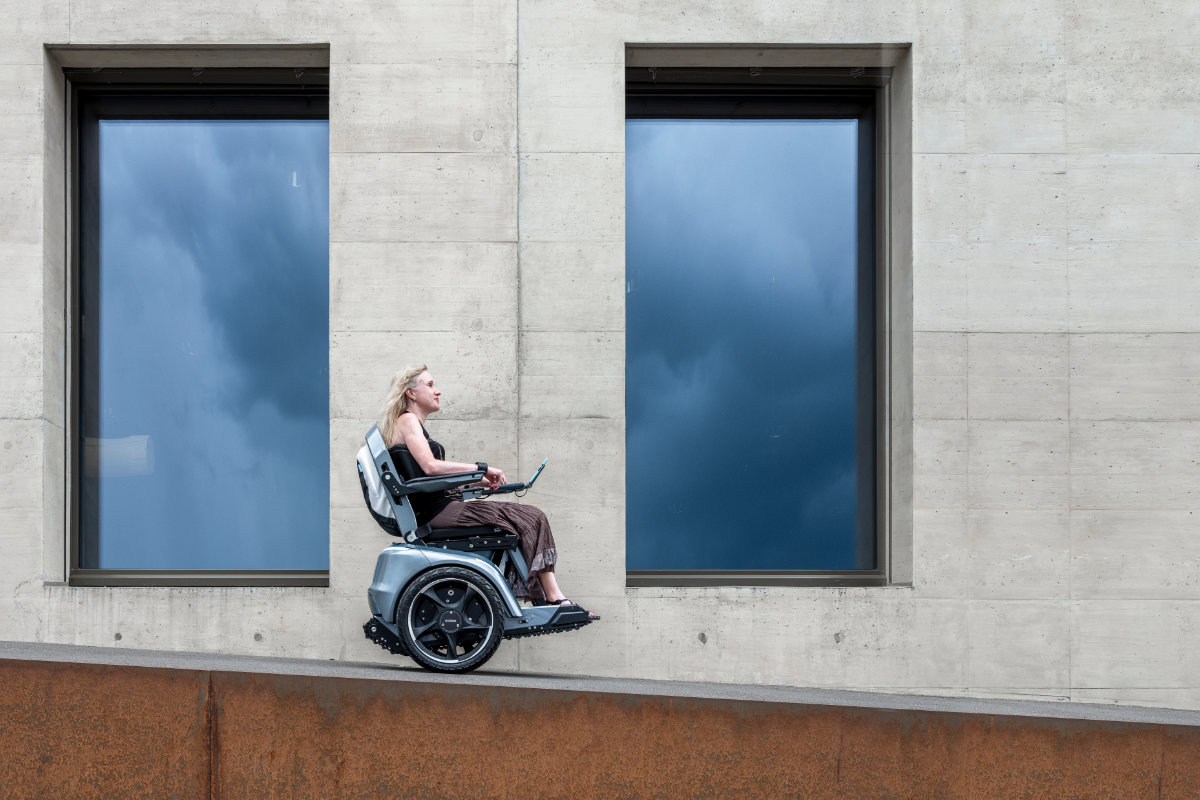
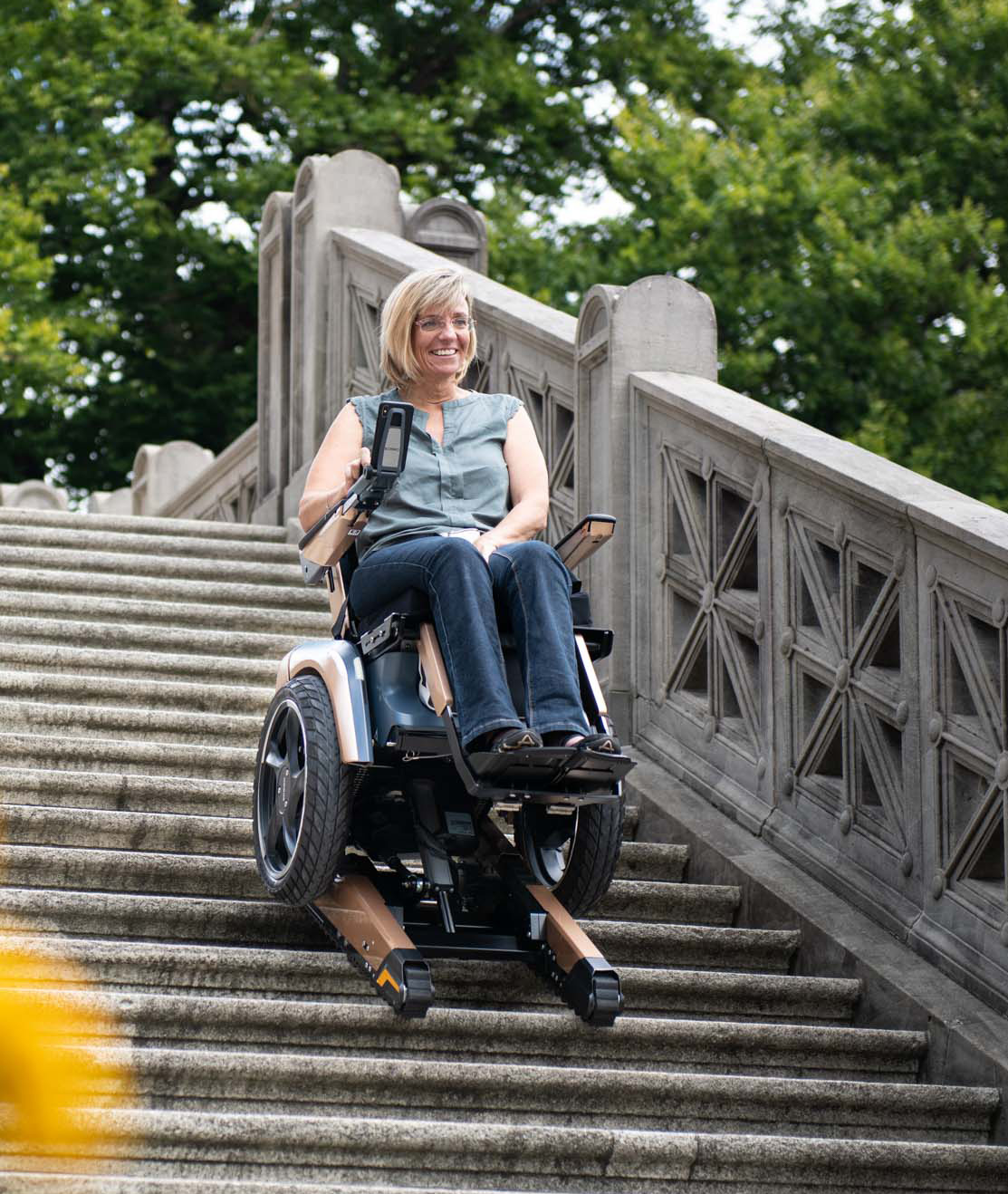
Scewo BRO
Felize’s loyal companion.
The courage to be visible
Be bold!